
Oil, rust, algae, and tire marks all look similar from a distance but behave completely differently when you try to clean them. Here's what's really happening on your driveway, and which of these a standard cleaning addresses.
Each surface sees different traffic and different stains, which is why we scope each one individually rather than treating a property as one flat job.
Ground-in dirt, algae, and grime from daily vehicle traffic and weather exposure.
Furniture staining, food and grease spots, and shaded algae growth.
Foot traffic wear and algae that creates a slip hazard on shaded paths.
Covered areas that trap humidity and rarely get rinsed clean by rain alone.
Where dirt and grime concentrate most heavily, right where the car sits.
Constant moisture makes these some of the fastest surfaces to grow slip-prone algae.
Oil, rust, algae, and tire marks all require different chemistry. Our standard cleaning handles algae, dirt, and grime; oil, rust, and tire marks are specialty treatments we quote separately, by request.
Concrete is porous, so oil doesn't just sit on top, it soaks in and spreads slightly below the surface, which is why an oil stain often looks bigger than the actual drip that caused it. Surface cleaning alone won't remove it; it takes a dedicated degreasing treatment to break the oil down chemically, and even then results vary and older, deeply set stains may only lighten rather than disappear.
Because it requires specialty chemicals and extra time on top of a standard cleaning, oil stain removal isn't part of our regular concrete cleaning quote. It's rare, but if you'd like us to attempt it, just ask and we'll quote it separately.
Rust comes from oxidized metal, patio furniture legs, sprinkler heads, fertilizer with iron content, or rebar too close to the surface, and it stains concrete at a chemical level rather than sitting on top of it. General cleaners won't touch rust; it needs a rust-specific chemical treatment that converts the iron oxide into a form that rinses away, and even then it rarely comes out completely.
Like oil, this isn't part of a standard concrete cleaning; it's a rare, specialty treatment we quote separately if you specifically ask for it.
The dark green or black discoloration on shaded concrete isn't dirt, it's organic growth feeding on the moisture concrete holds in its pores. Pressure alone can knock the visible growth loose, but a cleaning solution that actually kills it means the surface stays cleaner longer rather than regrowing within weeks.
Algae is also the main reason concrete gets slippery in shaded, damp areas, which is a safety issue as much as a cosmetic one.
Tire marks are rubber transfer, tiny amounts of tire rubber left behind from turning or braking, plus the road grime embedded in the tread. It's a physical residue rather than a stain that has soaked in, so it can respond well to a properly agitated cleaning solution and rinse, though results vary by surface and how long the marks have set.
Same as oil and rust, tire mark removal is a specialty request rather than something included in a standard cleaning, since it takes extra chemicals and time beyond the usual scope.
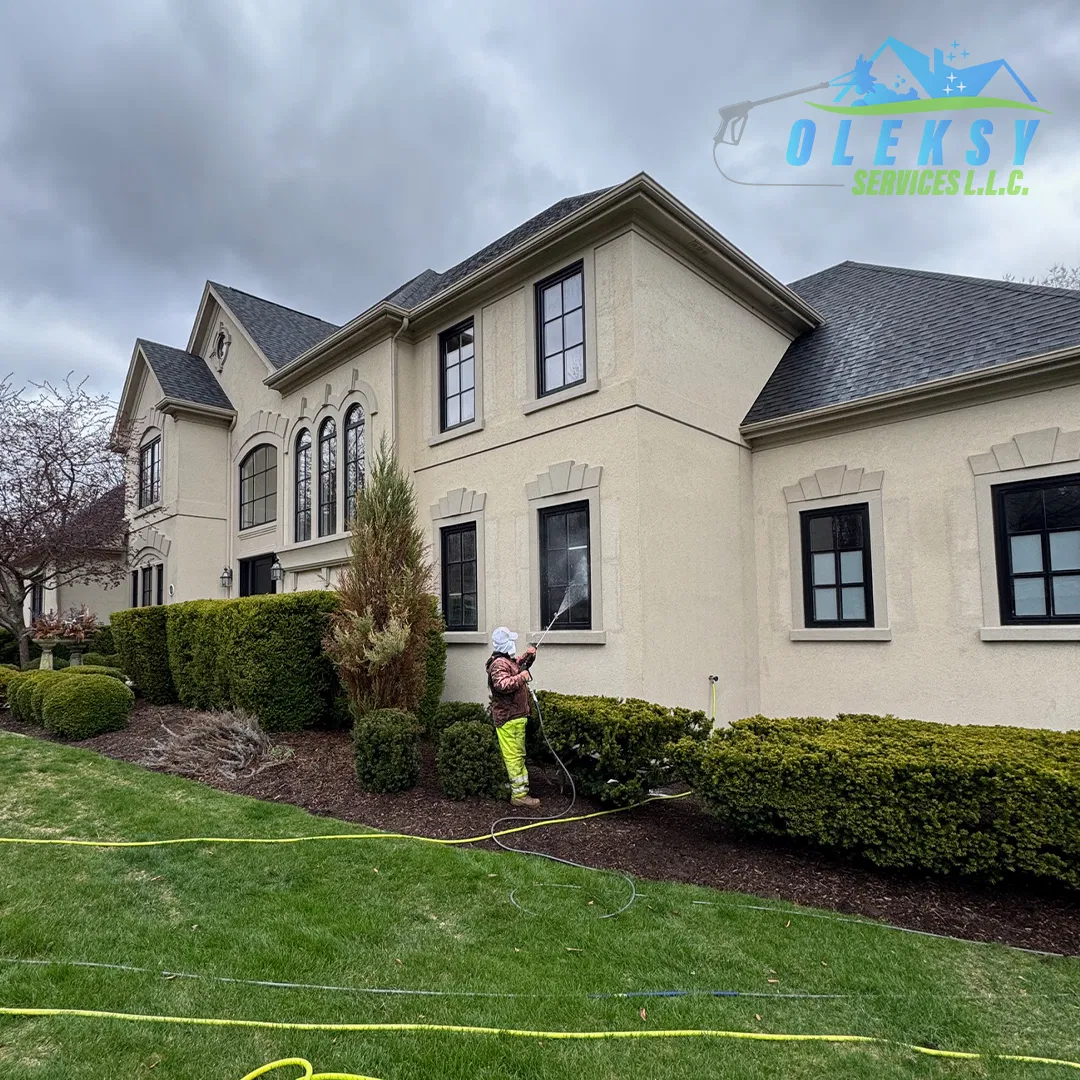
Concrete is far more pressure-tolerant than siding, roofing, or wood, which is why "power washing" is most associated with driveways in the first place. Our standard cleaning uses a cleaning solution and pressure matched to lift algae, dirt, and grime; pressure that's too high or held too close in one spot can still etch the surface or create visible "zebra stripes" from uneven passes, so technique matters even on a durable surface.
Real Oleksy Services projects completed for homes across Northern Illinois.
Get a free, no-obligation quote for your home.
Most driveways and patios in Northern Illinois look their best cleaned once a year, before algae and grime set in deeply.
If you do want oil or rust treated, fresher stains lift far more completely than ones left to set for months or years.
North-facing and tree-covered concrete regrows algae faster and may benefit from more frequent cleaning.
If your concrete has a sealant, we adjust pressure and chemistry so the cleaning doesn't strip it prematurely.
Free estimates, straightforward pricing, no pressure.
Also cleaning: Deck Cleaning · House Washing