
House washing looks simple from the sidewalk: spray, rinse, done. In practice it's a surface-specific chemical process most homeowners have never seen explained. This is how it actually works, and why it's done that way.
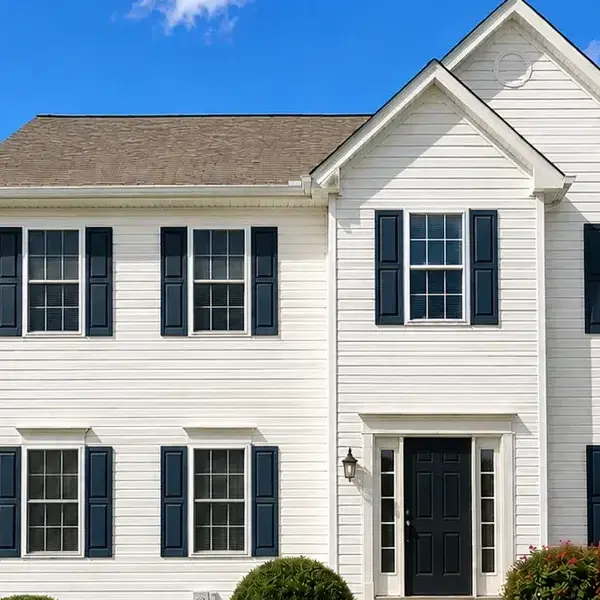
"House washing" is the industry term for cleaning a home's exterior, siding, soffits, fascia, and trim, using specialized cleaning solutions and low water pressure rather than the high-pressure blasting most people picture when they hear "power washing." The two terms get used interchangeably by homeowners, but professionally they describe different tools for different surfaces.
Pressure washing uses mechanical force, water hitting the surface hard enough to physically knock dirt loose. House washing uses chemistry: a cleaning solution formulated to break down algae, mold, and organic growth at the surface, then a low-pressure rinse to carry it away. That distinction is the reason a professional house wash looks better and lasts longer than what most homeowners get from renting a pressure washer for a weekend.
What looks like a dirty exterior is usually one or more of five specific things, and each one behaves differently.
A living organism, not dirt, that spreads across shaded and moisture-prone siding, feeding on humidity and organic debris.
Fungal growth that takes hold in damp, poorly ventilated areas: under eaves, behind shrubs, and on north-facing walls.
Pollen, tree sap, spider webs, and airborne organic debris that build up on siding season after season.
Dust, road grime, and pollution particles that settle on every exterior surface, worst near roads and driveways.
Because these are biological and chemical problems, not just visible mess, regular cleaning matters for reasons beyond appearance: algae and mold left in place keep feeding, keep spreading, and keep breaking down the surface underneath them.
Click below to see exactly what happens when high pressure meets siding.
Every house wash follows the same structure, adjusted for the specific materials and condition of your home.
We identify siding material, problem areas, landscaping to protect, and anything that needs special attention before starting.
Plants and sensitive areas are pre-wetted or covered, and windows and fixtures are checked for open gaps.
A soft-wash detergent matched to your siding material is applied from bottom to top and allowed to dwell.
The dissolved algae, mold, and grime is rinsed away, top to bottom, at a pressure safe for the material.
Gutter and downspout exteriors, and any spots that need a second look, get individual attention before we finish. (Clearing debris from inside the gutters is a separate a la carte service.)
We review the finished exterior with you before considering the job done.
Select a material below to see how we approach it and why it needs different care than the others.
Vinyl is the most common siding in Northern Illinois and generally the most forgiving material to clean, but its overlapping panel design is exactly why high pressure is a problem: water aimed directly at the seams can be forced behind the panels. We soft-wash vinyl from the bottom up with a low-pressure rinse to avoid driving water upward under the panel edges.
Vinyl's biggest recurring issue is algae staining on shaded, north-facing walls and any section under heavy tree cover, since those areas hold moisture the longest between rains.
Brick is porous, which means algae, mold, and mineral staining don't just sit on the surface, they work into the pores. Soft washing lets the cleaning solution penetrate the same way the growth did, rather than only cleaning what's visible on top. Mortar joints also need gentler handling than the brick itself; high pressure can erode softer mortar over time.
Efflorescence, the white, chalky mineral deposits that sometimes appear on brick, isn't caused by dirt and isn't removed the same way as organic growth. We identify which problem we're actually looking at before choosing a cleaning approach.
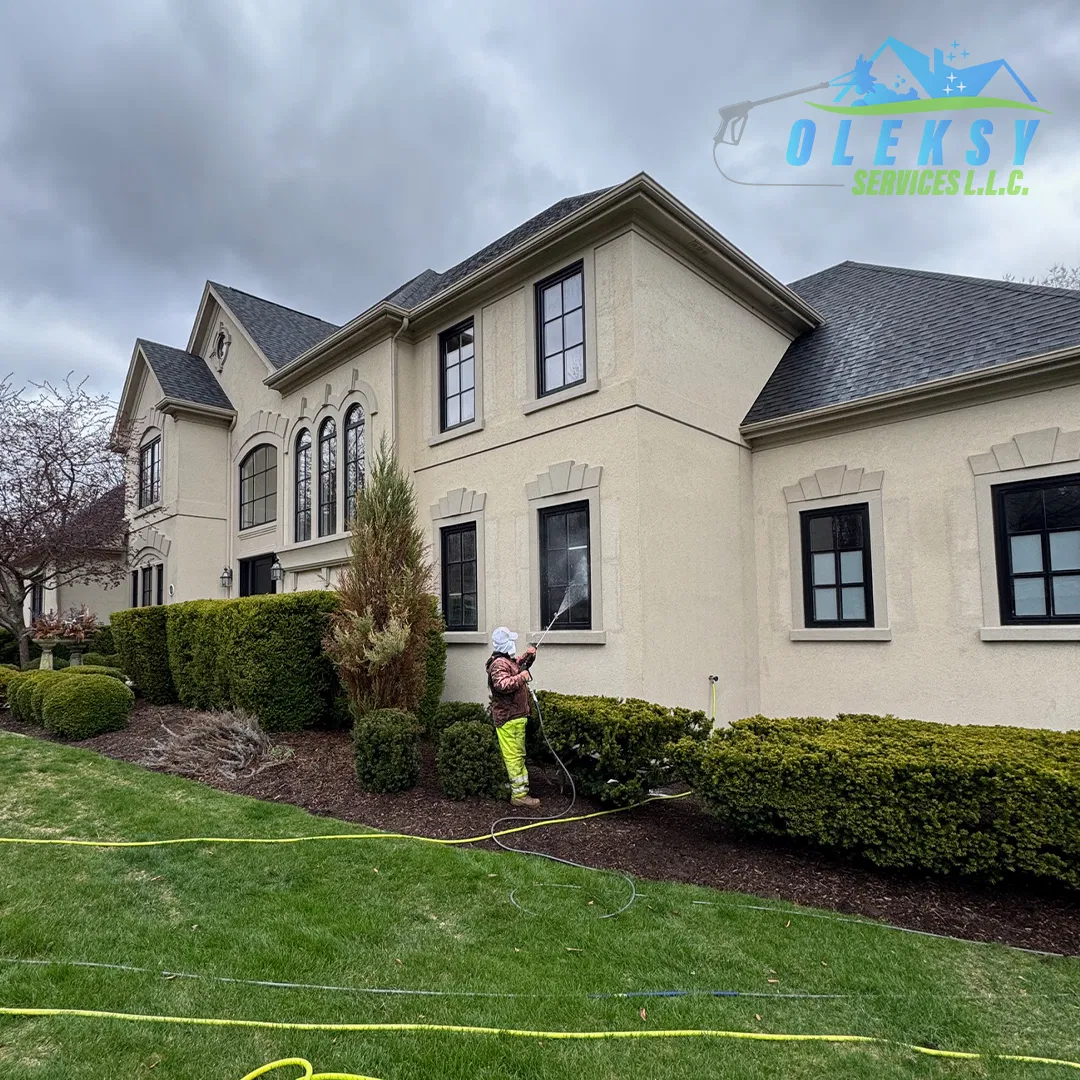
Stucco's textured surface holds dirt and organic growth in every ridge and pit, which is part of why it looks dingy faster than smoother siding. That same texture makes it especially vulnerable to high pressure, which can erode the finish coat and permanently change its texture. Low pressure and dwell time do the work here instead of force.
Because stucco is applied directly to a wall assembly with limited drainage, we're also careful about how much water contacts the surface and for how long, to avoid saturating the material.
EIFS, Exterior Insulation and Finish System, looks like traditional stucco but is built very differently: a foam insulation board behind a thin synthetic finish coat. That finish coat is far more fragile than real stucco and far less tolerant of pressure or aggressive scrubbing. This is one of the clearest examples of why "it looks like stucco" isn't enough information to clean it safely; misidentifying EIFS as traditional stucco and using traditional-stucco pressure is a common way EIFS gets damaged.
We treat EIFS with the lowest pressure and gentlest solution dwell time of any masonry-look material on this list.
Wood siding and trim are the most pressure-sensitive materials on a typical home. Grain can be raised, splintered, or gouged by pressure that vinyl or brick would tolerate without issue, and any paint or stain finish is even more vulnerable than the wood itself. Soft washing is close to mandatory here rather than a preference: the cleaning solution does essentially all of the work, with just enough rinse pressure to carry it away.
Wood is also the material most likely to already have hairline cracks or worn finish that trap moisture, so we look closely for areas that need extra care versus areas that are already compromised and shouldn't be pressured at all.
Aluminum siding is durable against moisture but its factory paint finish chalks and fades over time, especially on older installations. Aggressive scrubbing or high pressure can strip away more of that chalking finish than intended, leaving visibly different sheens between cleaned and uncleaned sections. We use a gentler touch specifically to clean evenly without accelerating that fade.
Aluminum can also show oxidation as a white or gray powder rather than green algae, which calls for a different cleaning approach than the organic-growth removal used on vinyl or wood.
A real Oleksy Services house wash. Drag the slider to compare before and after.
A cleaning solution kills algae and mold at the source. Pressure alone only removes what's visible on the surface.
Because the growth is actually killed rather than knocked loose, it takes longer to return than after a pressure-only clean.
Low pressure means no risk of forcing water behind siding, stripping paint, or etching stucco and EIFS.
Solutions are applied and rinsed with landscaping and runoff in mind, not just the wall being cleaned.
Real Oleksy Services projects completed for homes across Northern Illinois.
Get a free, no-obligation quote for your home.
Explore what typically happens after a house wash, and why an annual schedule keeps ahead of regrowth instead of catching up to it.
Siding is free of visible algae, mold, and surface dirt. Because the cleaning solution killed the organic growth rather than just displacing it, the surface stays clean noticeably longer than after a pressure-only wash.
Sun-exposed walls typically still look clean. Shaded, north-facing sections or areas under heavy tree cover may start showing the earliest signs of new algae, since those spots never fully dry between rains.
This is the point where most Northern Illinois homes benefit from another wash. Shaded areas usually show visible algae regrowth by now, and it's an efficient time to clean the whole exterior evenly rather than waiting for it to spread further.
Algae and mold left this long have had more time to work into porous surfaces like stucco and brick, which can mean a longer solution dwell time is needed to fully lift it. This is also when uncleaned growth starts contributing to actual surface degradation, not just appearance.
Recommended interval: once a year for most homes, with sun-exposed, low-tree-cover properties sometimes able to stretch to every 18 months, and heavily shaded properties benefiting from a check-in closer to the 9 to 12 month mark.
A clean exterior is the fastest, least expensive way to make a home look well cared for, before landscaping or renovation.
A washed exterior photographs better and reads as better-maintained to buyers and agents before the first showing.
Paint and stain adhere better to a clean, algae-free surface. Painting over dirty or contaminated siding shortens the life of the new finish.
Removing algae and mildew before they spread prevents the kind of long-term surface damage that's expensive to reverse.
Free estimates, straightforward pricing, no pressure.
Also cleaning: Roof Cleaning · Gutter Cleaning · Concrete Cleaning · Deck Cleaning